


 Fire
Fire Safety
 Survival
 Protection
 New
New


 Safety
Summer Grilling Safety Tips: What Every Backyard Cook Should Know
Summer and grilling go together. The warm evenings, the smell of smoke, the whole family in the backyard. It's one...
View Article

Spring is here. The grill comes out of storage. The hiking boots get laced up. The backyard finally gets some attention. Family road trips start getting planned.
Most people are thinking about fun. Very few are thinking about what could go wrong, and even fewer know which risks are actually the highest this time of year.
This guide is not the usual list of "bring sunscreen and drink water." Those things are true, but you already know them. What follows are the overlooked hazards, the underestimated risks, and the practical tools that can make a real difference when you're away from home and something goes sideways.
Spring feels safe. The weather is mild, the trails aren't icy, and it's still months away from the worst of wildfire season. That sense of ease is exactly what makes spring risky.
People underestimate trails because the conditions look gentle. They pull the grill out without inspecting it after months of sitting in a cold garage. They head out on hikes without the supplies they'd bring in summer heat. And they assume their vehicle emergency kit from three years ago is still good enough.
The numbers back this up. In the United States, fire departments respond to an average of more than 10,600 home fires involving grills and barbecues each year, with May, June, and July being peak months for grill-related fires. Nearly 20,000 people end up in emergency rooms annually from grill-related injuries alone.
And it's not just fire. In one study covering fifteen years of national park data, there were more than 65,000 search-and-rescue incidents resulting in over 24,000 people who were injured or ill. Spring hiking traffic is surging, and most of those people are underprepared.
None of this is meant to scare you away from enjoying the season. It's meant to help you actually enjoy it, by thinking ahead for five minutes before you head out.

The grill is spring's most iconic hazard. Most grill fires don't start because someone was careless mid-cookout. They start because of what happened before the first burger hit the grate.
Check the hose and connections before the first use of the season. Gas grills sit in garages or sheds all winter. Hoses crack. Connections loosen. Rodents sometimes chew through propane lines during the off-season. Before you turn the gas on, take 60 seconds to inspect the hose from the tank to the burners. A simple leak-check with soapy water can catch a problem before it becomes a fire.
Clean the grill before you cook, not after. Grease buildup in the drip tray and on the burner covers is one of the leading causes of grill fires. After sitting for months, old grease gets even harder and more combustible. Remove the grates, clean out the drip tray, and wipe down the burner covers before the season's first use.
Distance matters more than most people think. The grill should be at least ten feet from your home, deck railings, fences, or anything overhead including patio umbrellas, awnings, and tree branches. This sounds like a lot until you're watching a grease flare hit a dry wood fence.
Keep a suppression tool within reach. This is the tip most people skip. If a flare-up happens, you have seconds. A water bottle does nothing on a grease fire. A fire extinguisher is bulky, messy, and rarely actually positioned right next to the grill.
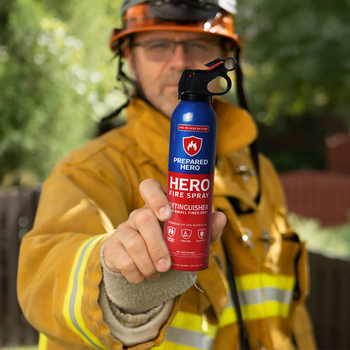
The Prepared Hero™ Hero Fire Spray is designed for exactly this. It's a compact, one-handed spray that works on grease fires, wood fires, and more. It's non-toxic, safe around kids and pets, and small enough to keep in a cabinet or on the patio table right next to where you're cooking. It leaves no powder residue to clean up. If you grill, it belongs near your grill.
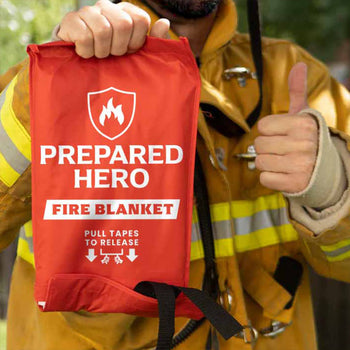
For fires that have spread beyond the immediate cooking area, the Prepared Hero™ Emergency Fire Blanket can smother a contained fire fast. Many families keep both products near their outdoor cooking setup during grilling season.


Spring hiking feels like the easy season. No ice on the trails. No extreme heat. No crowds yet. That's exactly why people take risks they wouldn't take in summer.
Temperature swings are more dangerous in spring than in summer. A 65-degree morning can turn into a 42-degree afternoon with wind and rain within a few hours, especially at elevation. Hypothermia does not require freezing temperatures. It can happen in mild, wet conditions when your body loses heat faster than it produces it.
Most hikers know to bring layers. Fewer know to bring something that handles the worst case. The Prepared Hero™ Hero Survival Bag is a NASA-designed Mylar emergency sleeping bag that reflects 90% of body heat. It packs smaller than a soda can and weighs less than a smartphone. You won't use it on most hikes. But if someone in your group takes a bad fall, gets separated, or gets caught in unexpected weather at dusk, it's the difference between a manageable situation and a dangerous one.
The Prepared Hero™ Hero Poncho works the same way for rain and wind. It's bright orange, so it also doubles as a visibility signal if a rescue team is looking for you. For a trail pack, it takes up almost no space and weighs almost nothing.
Tell someone where you're going. This sounds obvious. Most people don't actually do it. Before a hike, text someone the trailhead name, your planned route, and when you expect to be back. If something goes wrong, this is the information that makes a search-and-rescue operation possible.
Falls are the number one hiking injury. Ankle sprains alone account for a large share of all trail-related emergency room visits. Most of them happen on the way back down, when legs are tired, attention drifts, and the trail seems familiar enough to move fast. Slow down on descents. Use trekking poles on loose or uneven terrain. And carry a basic first aid kit with wrap bandages in case something does happen.
Afternoon thunderstorms are a spring fixture in many parts of the country. If your hike takes you above the tree line or onto exposed ridges, start early and plan to be below elevation by midday. Lightning-related deaths in outdoor recreation are almost entirely preventable with basic timing adjustments.


Spring is road trip season. Long weekends, national parks, college move-outs, family visits. Millions of people are driving routes they haven't driven before, often on roads that are still recovering from winter.
Your vehicle emergency kit probably isn't what you think it is. Most people have jumper cables and maybe a flares kit somewhere in the trunk. That's the beginning of an emergency kit, not a complete one. Here's what most kits are missing:
A heat retention layer. If you break down in cold, wet weather, your car warms up quickly, but it also cools down quickly. If you're waiting for a tow for two or three hours in a spring rainstorm after dark, the temperature inside a stopped vehicle can drop fast. The Prepared Hero™ Hero Survival Bag takes up almost no space in a glovebox or cargo area and gives you a real safety net for exactly this kind of scenario.
A poncho. This is different from a trash bag or a disposable rain poncho. The Prepared Hero™ Hero Poncho is made from heat-retentive Mylar material, so it handles wind and cold as well as rain. If you need to get out of your vehicle for any reason in bad conditions, it protects your core temperature.
Check your tires before a long spring drive. Tire pressure fluctuates with temperature changes. Tires that were fine in winter may be over- or under-inflated after consistent temperature swings. Check the pressure cold, before driving, against the number on the door jamb sticker, not the max pressure on the tire sidewall. A blowout at highway speed is not a situation most people have practiced for.
Know what to do if your car catches fire. This sounds extreme, but vehicle fires are more common than most people realize, particularly during road trips when engines run at sustained highway speeds. If you smell burning, see smoke, or feel unusual heat from the dashboard: pull over immediately, turn off the engine, get everyone out, and move well away from the vehicle before calling 911. Do not go back in. This is one situation where the Prepared Hero™ Hero Fire Spray, if accessible from the passenger compartment, can address a very small under-hood fire in its earliest moments. However, any fire that has moved beyond the earliest stage requires distance and emergency services.
Spring roads may have hazards that weren't there in fall. Frost heaves, repaired potholes that haven't fully settled, debris from winter storms, animals that are newly active after winter. Drive at posted speeds, allow extra following distance, and don't use cruise control on unfamiliar roads.

Camping season picks up in spring, and so do campfire-related incidents. Dry spring winds and low humidity in many parts of the country can make even a small, well-managed campfire a serious risk if conditions shift.
Always check burn bans before you go. Many state and national forests implement burn bans in spring based on wind, humidity, and drought conditions. These change frequently. Check the specific land management agency website for the area you're camping in, not a general weather app. A ban that wasn't in place when you booked your trip may be in place by the time you arrive.
The "dead campfire" isn't always actually dead. Coals can stay hot for hours and reignite with wind. Before you leave a campsite or go to sleep, drown the fire with water, stir it with a stick, and drown it again. Repeat until the coals are cool to the touch. Warm ash that feels safe when you go to bed can become a problem in a 3am gust.
Campfire sparks travel farther than you think. Build fires in designated rings when they're available. When they're not, clear a ten-foot area down to bare mineral soil. Set up camp with tents well away from the fire area, not just a few feet. Nylon and polyester fabrics catch quickly.
Keep a suppression option nearby. Many campsites have no fire extinguisher within reach. The Prepared Hero™ Hero Fire Spray is compact enough to pack with camping gear and handles the kinds of small, early-stage fire situations that happen around campsites: sparks that catch on dry brush, a cooking fire that flares unexpectedly, an ember that lands somewhere it shouldn't. It's not a substitute for proper fire management practices, but it's a useful backup when you're away from infrastructure.


Spring travel doesn't just bring outdoor risks. Hotels, rental properties, and vacation lodgings are part of the mix for millions of families this season, and they come with a risk most people don't think about until something happens.
Hidden cameras in rental properties and hotel rooms have become a documented and growing problem. These devices are placed in bedrooms, bathrooms, and living areas without guests' knowledge or consent.
The Prepared Hero™ Hero Privacy Pen is a detection device that looks like an ordinary pen but scans for wireless camera signals, RF transmitters, and GPS trackers. It detects devices whether they're actively streaming or sitting in standby mode. It's TSA-approved, rechargeable, and small enough to slip into a jacket pocket or travel bag. It takes about two minutes to scan a hotel room or rental property before unpacking.
This is not a paranoid purchase. It's a two-minute check that gives you real information. For families traveling with children, the peace of mind alone is worth it.

Not every outing needs every item on this list. But before any spring activity where you'll be away from home for more than a few hours, run through this and fill in the gaps:
For grilling and backyard gatherings:
For hiking and trail activities:
For road trips:
For camping:
For travel and lodging:

None of this is about being afraid of spring. It's the opposite.
When you've thought through the risks for five minutes and put the right tools in the right places, you go out with more confidence and less hesitation. The family road trip is more relaxed when you know there's a survival bag in the trunk. The campfire is more enjoyable when you're not wondering if you'd know what to do if something caught.
Prepared Hero's mission is to make practical safety tools that anyone can use, no training required. Whether it's keeping a Hero Fire Spray by the grill, slipping a Hero Survival Bag into a hiking pack, or scanning a rental room with a Hero Privacy Pen before your family unpacks, every one of these is a small step that takes almost no effort and can make a very large difference.
Check out Prepared Hero's complete line of safety products here and take 20 seconds to add what's missing from your spring kit. Your family will thank you for it, even if they never have to use it.
Stay prepared, hero!
Spring Clean Your Home Safety: A Room by Room Guide The most overlooked safety hazards in your home, organized by room. What to check and what to fix before the season changes.
Do Fire Blankets Work on Grease Fires? Grease fires are one of the most common outdoor cooking emergencies. Here's what actually works and what makes things worse.
How Many Smoke Detectors Do I Need? The right number for your home layout, and how to make sure every sleeping area is covered when it counts.
Summer and grilling go together. The warm evenings, the smell of smoke, the whole family in the backyard. It's one...
Blows down the street, or a heat wave pushes the grid past its limit. Suddenly, your home goes completely dark....
Minor injuries happen when you least expect them. A scraped knee at the playground, a cut while hiking, or a...

#1 Best Seller on Amazon




Join The
Hero Team
Subscribe To Our
Newsletter & Save $5 Today!


 30 N Gould St #37171
  +1 888-457-2672
 support@preparedhero.com
